Moisture and source assessment
We look for the conditions that let mold grow in the first place, such as active leaks, condensation, wet insulation, or damp crawl spaces, so the fix lasts.
Serving Huntsville, Alabama & surrounding areas
24/7 Emergency Response
One call instead of ten No web forms, no callback spam 24/7 Emergency Response
Mold remediation · Huntsville, AL
Stop the spread, fix the moisture source, and get a clear, written remediation plan for your home or business. Our certified team handles inspection, containment, removal, cleaning, and documentation.
A real person answers - 24/7 Emergency Response
Cause-first remediation
If you are searching for mold remediation Huntsville AL, you are usually dealing with two problems at once: the mold you can see and the moisture you cannot ignore. Mold Remediation Huntsville provides residential and commercial remediation in Huntsville and the surrounding Alabama area with an approach built around containment, proper removal, and moisture control.
In North Alabama, humid summers, heavy rain events, and common leak points—roof penetrations, plumbing supply lines, HVAC drain lines, and crawl space vapor—can turn a small issue into a recurring one. Real remediation means you do not just wipe a surface. You isolate the work area, remove or clean materials using the right method for the material, and confirm that conditions are dry enough to prevent regrowth.
If you are still deciding who to hire, look for a contractor that can explain the scope in plain terms: where the mold is, what materials are affected, how the area will be contained, what gets removed versus cleaned, what drying is required, and what documentation you will receive at completion. That is what you should expect from professional Alabama mold remediation.
Service details
We look for the conditions that let mold grow in the first place, such as active leaks, condensation, wet insulation, or damp crawl spaces, so the fix lasts.
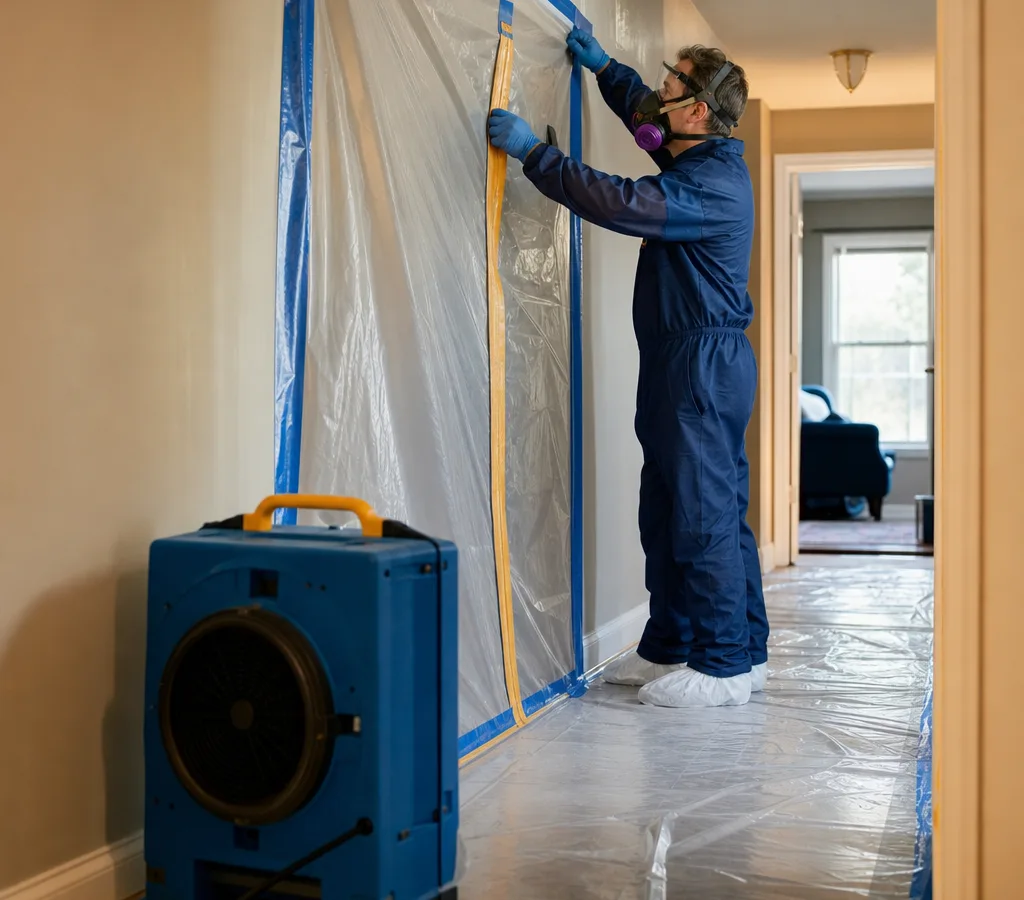
We isolate affected areas with plastic barriers and controlled airflow so disturbed spores and dust stay in the work zone, not in the rest of the building.
HEPA air scrubbing and HEPA vacuuming are used to reduce airborne particulate and capture fine debris during and after removal.
When drywall, insulation, carpet padding, or porous items are contaminated beyond practical cleaning, we remove and dispose of them safely as part of the remediation scope.
After cleaning and removal, we may apply antimicrobial products where they make sense for the surface and situation, based on the work plan.
You get a straightforward scope of work and completion notes so you know what was done, what was removed, and what to watch for going forward.
Property-specific planning
Different areas point to different moisture problems. During mold remediation in Alabama, we tailor containment and removal to the building materials and the likely source.
If you also need specialty work like crawl space mold removal, the same containment and HEPA practices apply, but the access and moisture-control plan becomes even more important.
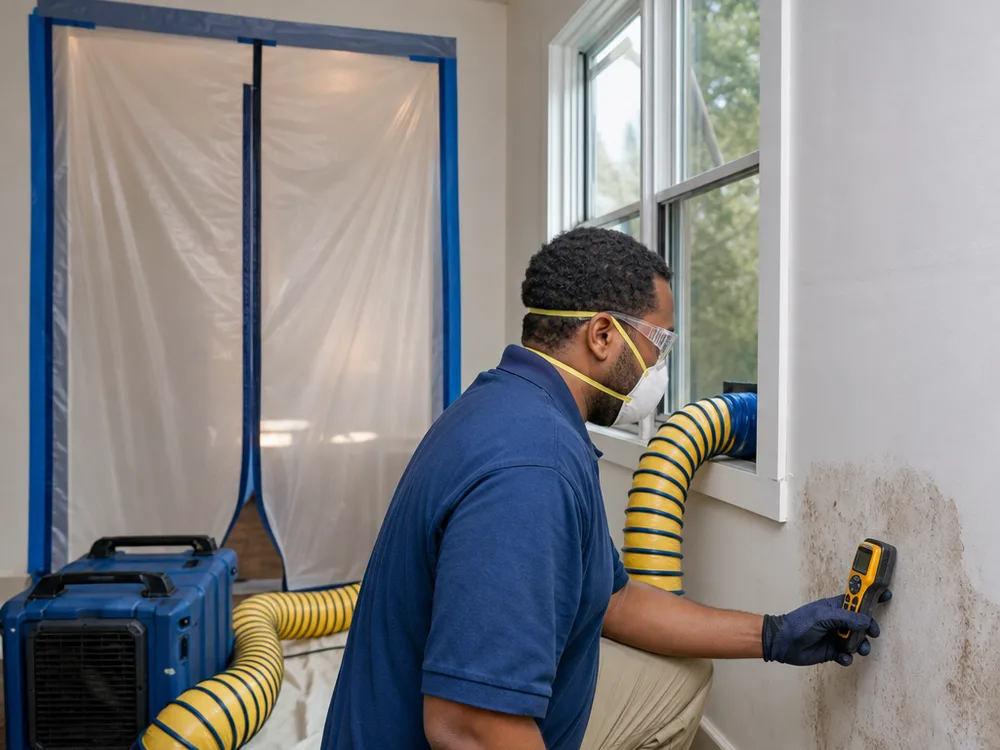
We identify affected areas, likely moisture sources, and what materials are impacted. You receive a clear scope that explains containment, removal or cleaning methods, and what is included.
We protect flooring and pathways, set up barriers, and establish negative air when needed. This step is what keeps the rest of your property cleaner during the work.
Porous materials that cannot be effectively cleaned are removed. Remaining surfaces are cleaned using HEPA vacuuming and appropriate methods for wood framing, concrete, or other substrates.
If moisture is present, drying is addressed as part of the plan. We also point out practical fixes that prevent recurrence, such as ventilation improvements or leak repairs, often completed by the appropriate trade.
We perform a detailed cleanup of the work area and provide completion notes. If third-party testing is requested, we coordinate timing so the space is ready.
Pricing context
Mold remediation in Huntsville typically ranges from about $800 to $6,000+, with small, contained areas often on the low end and larger multi-room or crawl space projects on the high end. Projects that involve heavy demolition, widespread HVAC impact, or long drying times can exceed that range.
Your final price depends on the size of the affected area, what materials are contaminated—drywall and insulation cost more to remove and replace than hard surfaces—how much containment is required, access to attics and crawl spaces, and whether moisture is still active. Exact cost is confirmed after an on-site inspection and a written scope of work.
Customer experiences
“They explained what was actually causing the mold, set up containment so the rest of the house stayed clean, and the odor was gone once the damp materials were removed.”
“The written scope made it easy to understand what would be removed versus cleaned. The crew showed up on time and kept the work area controlled the entire time.”
“We needed remediation in a small office suite and were worried about disruption. They coordinated the setup and cleanup so we could reopen quickly.”
Straight answers
Most mold remediation projects take 1 to 3 days of on-site work, but timelines can extend when drying is required or when multiple rooms, attics, or crawl spaces are involved. The biggest schedule drivers are how quickly moisture can be corrected and how much material needs to be removed and bagged out under containment.
Often you can stay home during remediation, especially when the affected area can be fully contained and there is a separate pathway for the crew. If the mold is in a main living area, if sensitive occupants are present, or if large portions of flooring or drywall must be removed, it may be more comfortable to be out of the work zone until cleanup is complete.
Remediation can start with containment and removal, but it should not be considered complete until the moisture source is stopped. In practice, we help you identify where water is coming from and coordinate timing so the fix and the remediation work together, which is key for mold remediation Alabama projects that would otherwise recur.
Painting over mold does not fix the problem because the underlying contamination and moisture can remain in porous materials like drywall, wood, and insulation. Proper remediation addresses the source, removes or cleans the affected material, and verifies the space is clean and dry enough before cosmetic repairs.
If mold impact is limited to accessible components near the air handler or registers, we can address cleaning in those areas as part of a remediation plan. If there is suspected contamination deep in ductwork or a need for specialized HVAC disassembly, we recommend involving an HVAC contractor so the system is handled correctly and safely.
Keep the area as undisturbed as possible and avoid running fans that could move air from the affected room into clean spaces. If you can, clear a pathway to the work area and remove valuables or fragile items nearby. We will review any prep needed for your specific scope during scheduling.
A clear next step
Tell us what you are seeing and where it is happening. We will assess the affected areas, explain the containment and removal approach, and provide a written scope so you can move forward with confidence.