Musty odor that returns
If the smell comes back after airing out or cleaning, moisture may still be trapped under floors or inside walls.
Serving Huntsville, Alabama & surrounding areas
24/7 Emergency Response
One call instead of ten No web forms, no callback spam 24/7 Emergency Response
Flood-related mold cleanup · Huntsville, AL
After a storm or flash flood, mold can start growing fast in wet drywall, flooring, and insulation. Get a clear plan for safe drying, removal, and cleanup that protects your air and prevents the problem from coming back.
Immediate priorities
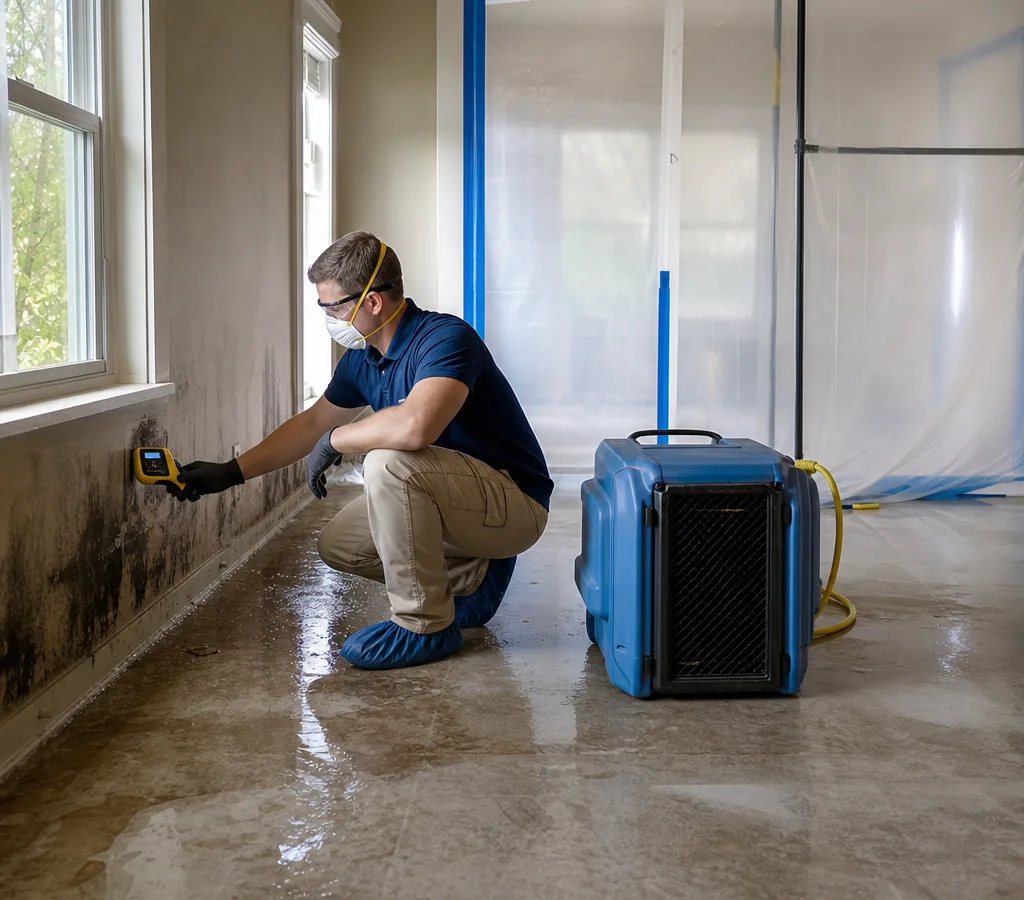
If you are dealing with mold after heavy rain flooding Huntsville, speed matters, but so does doing it safely. Visible spots are only part of the issue. Water can wick up behind baseboards, soak insulation, and sit under floors, creating hidden growth that keeps releasing spores and odor.
Start with the basics:
Mold Removal Huntsville focuses on storm and flood situations where moisture may be trapped. The goal is to identify what is wet, dry it to a safe level, remove what cannot be saved, and leave the space clean and ready for repairs.
Hidden moisture risk
Heavy rain can overwhelm grading, gutters, crawl spaces, and low points around foundations. Once water gets inside, the biggest risk is what you cannot see: damp insulation, swollen trim, wet subfloor, and wall cavities that stay humid even when the surface looks dry.
Mold can begin growing within 24 to 48 hours on many building materials when moisture and warmth stick around. Huntsville's long stretches of humid weather make it harder for a flooded structure to dry on its own. Fans alone are rarely enough if water has moved behind finishes.
If your home is near low-lying areas or you have a crawl space, floodwater can raise humidity under the house and push damp air into living areas through gaps around plumbing and wiring. A proper cleanup must account for how moisture can spread through the structure, not only what is visible at the surface.
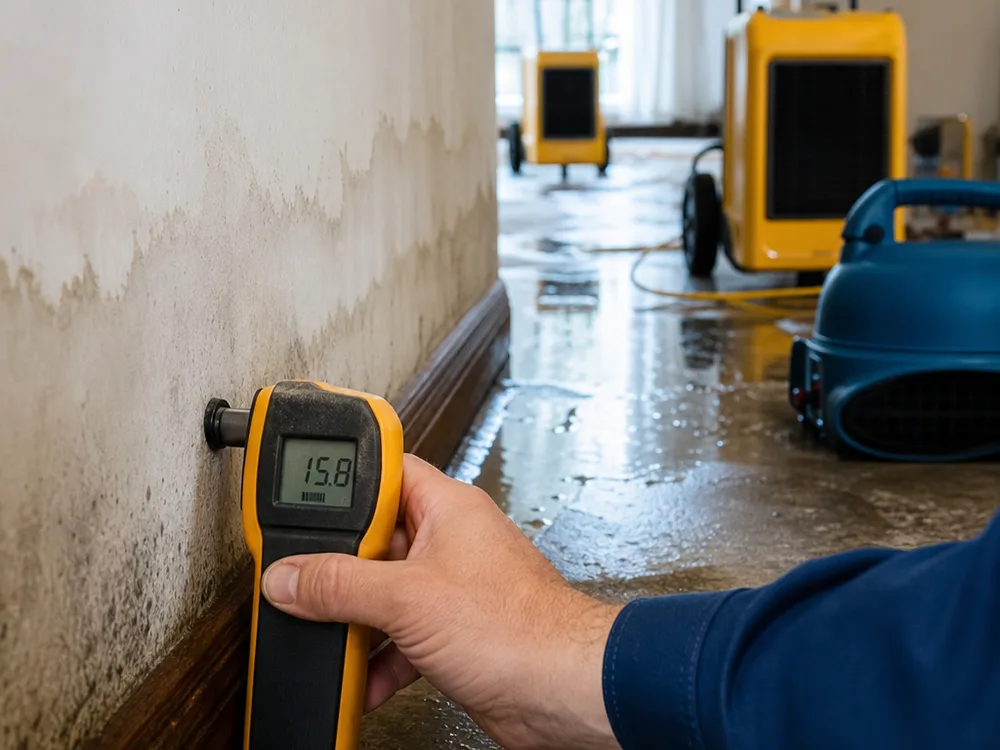
If the smell comes back after airing out or cleaning, moisture may still be trapped under floors or inside walls.
Bubbling paint, soft drywall, staining, or warped trim can mean water is still present where mold likes to start.
Cupped hardwood, lifting laminate, or damp carpet padding often point to wet subflooring and hidden growth.
Sneezing, itchy eyes, or headaches that improve when you leave the house can be a clue that indoor air is impacted.
Mold often shows up first where air is still, like closets against exterior walls, under sinks, and behind furniture.
From wet materials to rebuild
We inspect affected rooms and adjacent areas, check moisture in drywall, trim, and flooring, and outline what needs drying versus removal. Flood situations often require checking wall bottoms and subfloors even when the surface looks fine.
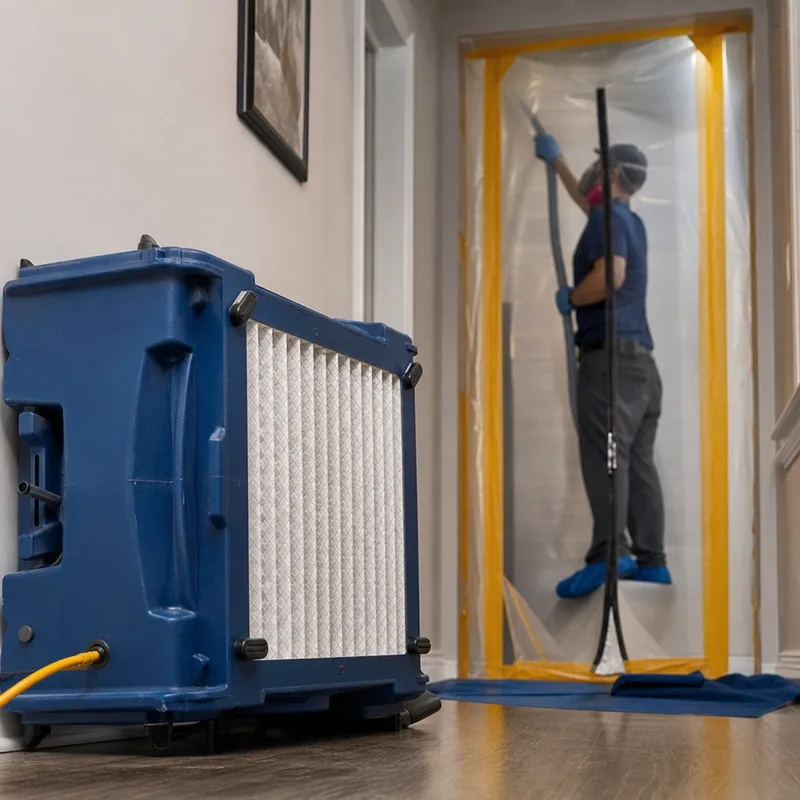
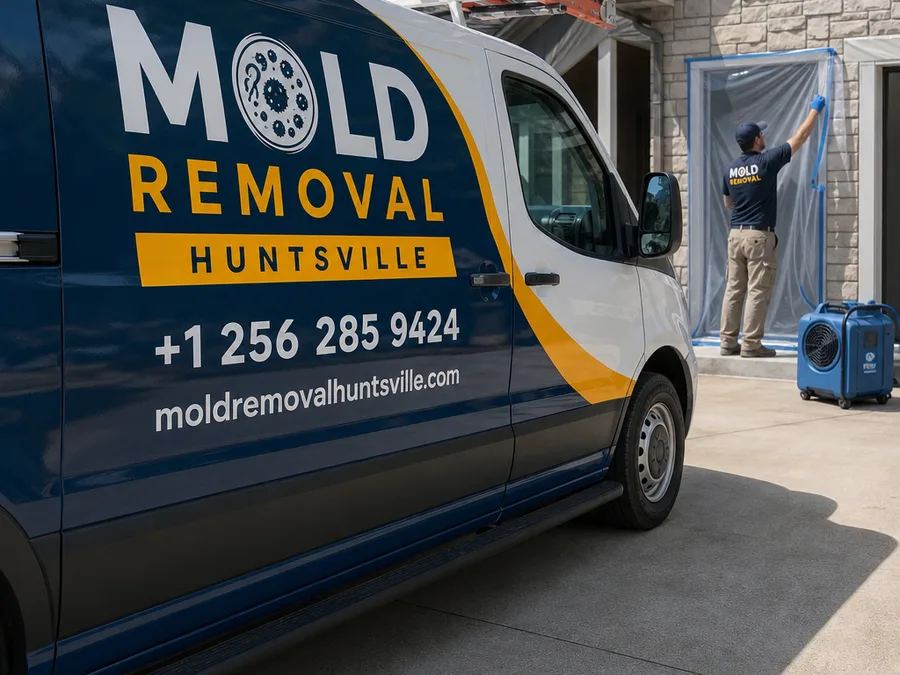
When removal is needed, we isolate the work area with plastic sheeting and use negative air setup when appropriate. This helps keep particles from spreading to clean parts of the home.
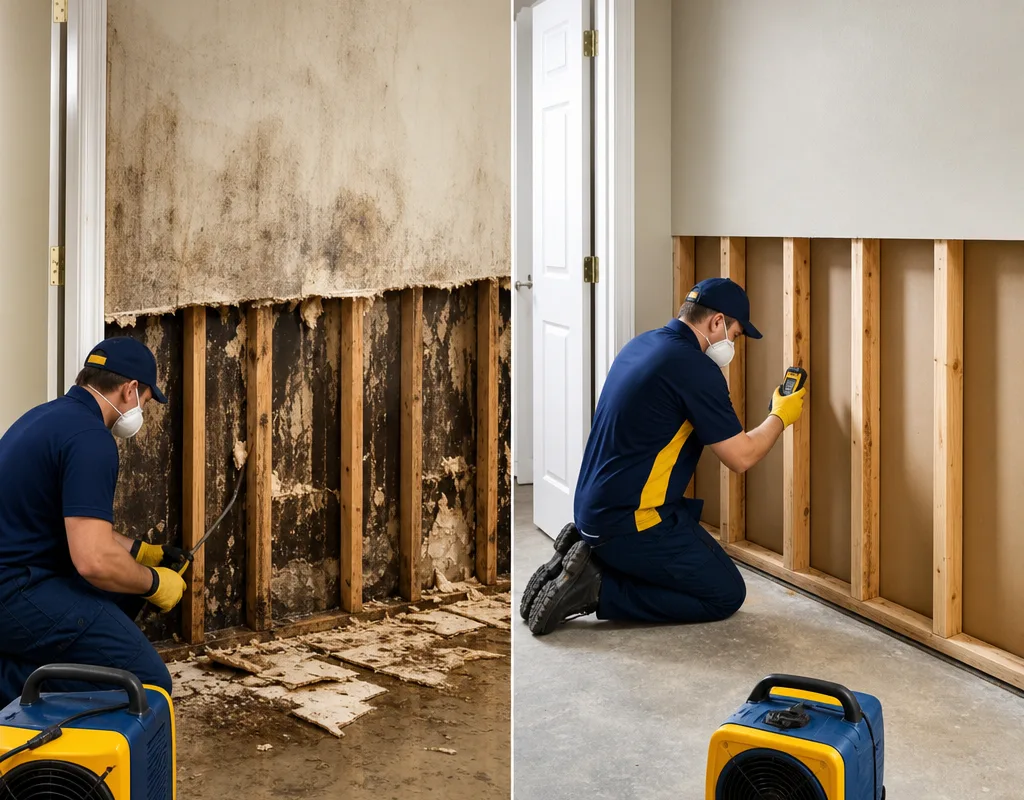
Wet, mold-impacted porous materials commonly include drywall, insulation, carpet padding, and some fabrics. We remove what cannot be cleaned effectively and bag out debris safely.
We HEPA vacuum and clean exposed framing and surfaces, then apply appropriate antimicrobial products where needed. The aim is to remove contamination, not cover it up.
We run professional dehumidification and air movement until materials reach safe moisture levels. Drying is confirmed with measurements because remaining moisture is a common cause of repeat growth.
Once the area is dry and clean, it is ready for drywall, baseboard, and flooring repairs. We can explain typical rebuild sequences so the space does not get closed up while still damp.
Pricing context
Most mold cleanup projects after a flooding event in Huntsville typically range from about $1,000 to $6,000+, with small, contained areas sometimes closer to $500 to $1,500 and larger multi-room or crawl-space-affected jobs running higher. Final cost depends on how far water traveled, how much drywall or flooring must be removed, access to wall cavities or subfloors, and how long drying equipment needs to run. The exact price is confirmed after an onsite inspection and a written scope.
📞 Huntsville • 24/7 ResponseCleanup in the field
Homeowner experiences
“After the rain came through the back door and soaked our living room, the smell got worse each day. They explained what was wet behind the baseboards, set up containment, and dried everything out before repairs started. The musty odor is gone.”
Ashley R.
“We thought we had it handled with fans, but moisture was still under the flooring. The inspection showed exactly where water spread, and the cleanup plan made sense. The team kept the rest of the house clean while they worked.”
Marcus L.
Straight answers
Mold can start growing in 24 to 48 hours when porous materials stay wet. After heavy rain flooding, drywall paper, carpet padding, and insulation are common early growth points, especially if humidity remains high inside the home.
Fans can help, but they do not replace dehumidification or targeted drying inside wall cavities and under flooring. If you suspect mold or smell mustiness, running the HVAC can move particles through the house, so it is often better to isolate affected rooms until an inspection confirms the situation.
Sometimes, yes, if moisture did not soak into the drywall core and growth is limited to a cleanable surface. After heavy rain flooding, water often wicks up from the floor line, and a controlled flood cut is frequently the safest way to remove wet materials and dry the wall cavity.
Not always. Carpet and pad can dry on top while the pad, tack strip area, or subfloor stays damp, which keeps odor and growth going. A moisture check is the quickest way to confirm whether drying is complete or removal is needed.
Testing is not required for many flood-related mold jobs because the source moisture and affected materials are clear. If the situation is unclear, symptoms persist, or you need documentation for a claim or landlord, testing can be discussed as part of the inspection.
If items contacted contaminated floodwater, porous belongings like some upholstered items, cardboard, and soaked insulation are often not salvageable. For sentimental belongings, we can discuss what may be cleaned versus what is risky to keep based on material type and exposure.
Small contained areas may be cleaned and dried in 1 to 3 days, while multi-room flooding or wet subfloors can take several days to a week or more. The timeline depends on how wet materials are, whether removal is required, and how quickly the structure reaches safe moisture levels.
A clear next step
Tell us what happened during the rain event and what areas were affected. We will inspect, explain what is wet or contaminated, and provide a written scope for drying and removal so you can move forward with repairs confidently.