What to Check for Mold After Heavy Rain or Flooding in Huntsville
Even if you’re outside a mapped flood zone, heavy rain can leave hidden moisture behind. Here’s what to check, and why the window to act is short.
“I’m not in a flood zone” doesn’t mean you’re safe
According to the City of Huntsville, roughly 29 square miles, about 17% of the city’s land area, sits within the 100-year floodplain, affecting more than 6,000 developed properties (6.7% of developed land in the city). But here’s the part most homeowners don’t expect: more than 90% of drainage complaints the city receives between major floods come from residents who live outside the mapped floodplain. Local drainage problems, clogged culverts, and flash flooding from intense storms don’t respect the lines on a flood map.
Huntsville’s flash flooding can happen fast
This isn’t hypothetical. In June 1999, Huntsville saw about 6 inches of rain fall in just 2 hours. Aldridge Creek rose 8 feet in only 30 minutes, and the flash flood caused one fatality. Water moving that fast doesn’t just cause visible damage, it drives moisture deep into walls, subfloors, and crawl spaces where it can sit unnoticed for weeks.
Why soaked materials need fast, careful drying
The City of Huntsville notes that soaked building materials behave in ways that surprise a lot of homeowners: wood that’s dried too quickly can swell and crack, while wet gypsum wallboard can fall apart if it’s bumped or handled before it’s properly dried out. That means the DIY instinct to blast a fan on wet drywall and hope for the best can actually make the damage worse, not better.
The 24-48 hour window that matters most
The EPA is direct about this: the key to controlling mold indoors is controlling moisture, and water-damaged materials should be dried within 24 to 48 hours to prevent mold growth from taking hold. After a heavy rain event, that clock starts as soon as water enters your home, whether that’s obvious flooding or a slow seep you don’t notice right away.
What to check after a heavy rain event
- Crawl spaces and basements — standing water, damp insulation, or a musty smell
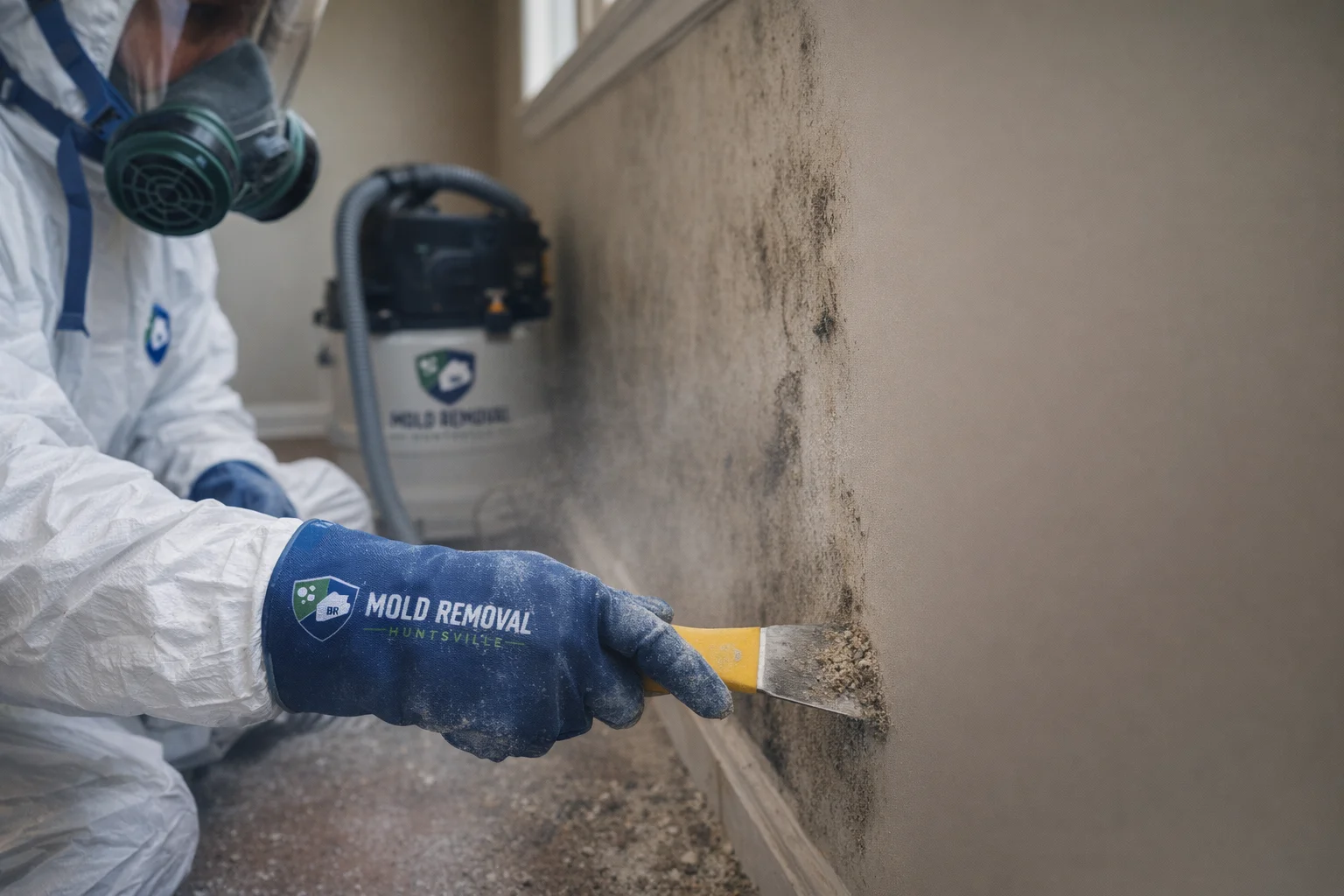
- Baseboards and lower walls — discoloration, bubbling paint, or a soft feel when pressed
- Window and door frames — moisture intrusion around seals after wind-driven rain
- HVAC intake areas — mold can spread through ductwork if moisture reaches the system
- Attic spaces — roof leaks from heavy rain often show up as ceiling stains days later
If you’ve had recent heavy rain and notice any of the above, or simply want a professional set of eyes on it before mold has a chance to establish, request an instant assessment below, or read our full mold removal guide for what happens next.
Quick Answers After a Storm
Sources: City of Huntsville, AL — floodplain and stormwater data; City of Huntsville building-materials drying guidance; U.S. EPA — A Brief Guide to Mold, Moisture, and Your Home.
Let’s Check Your Home Before Mold Takes Hold
No pressure, no guesswork — just an honest inspection and a clear plan from a local Huntsville team that knows the area.
Trusted by homeowners across Huntsville and North Alabama.